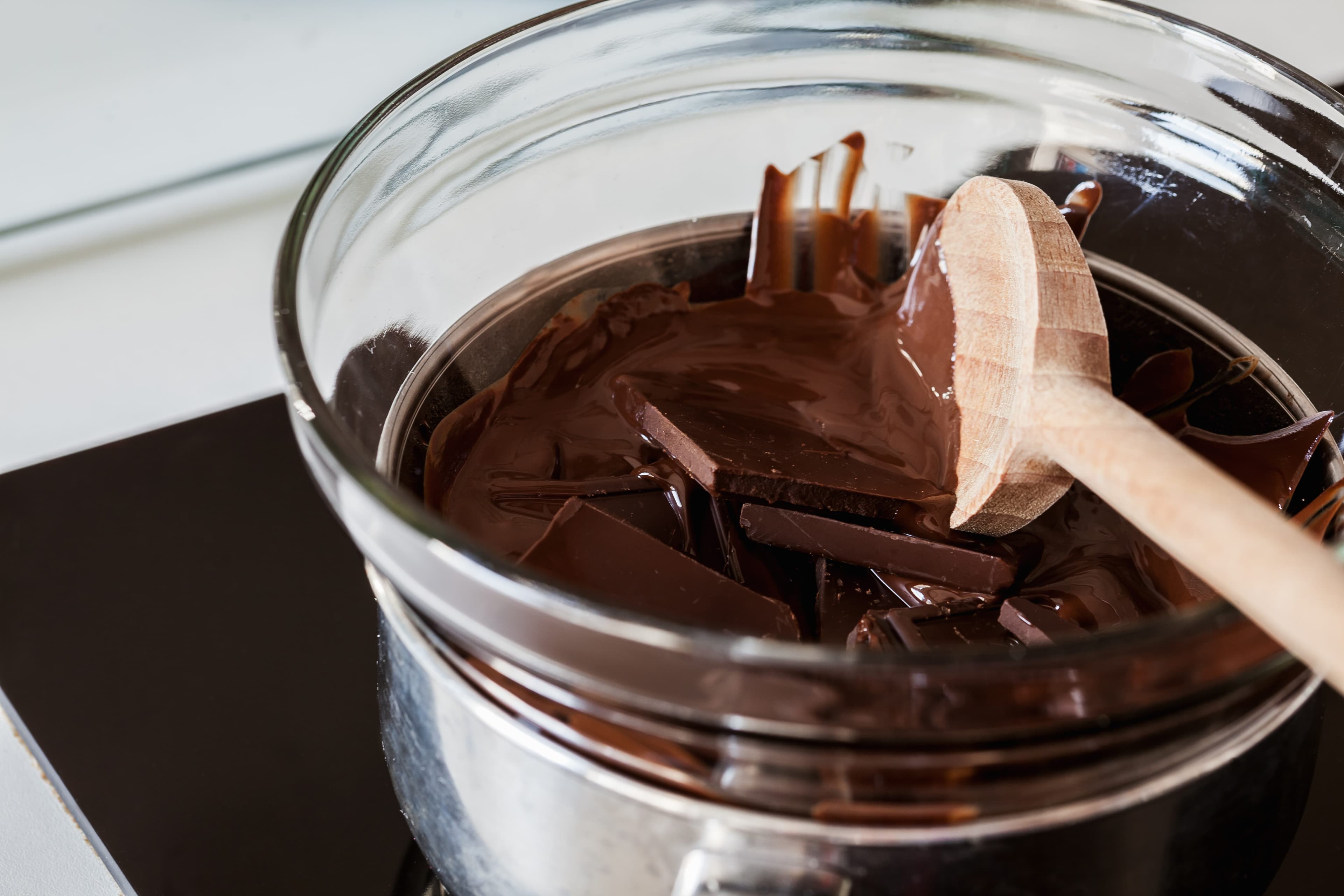
Fancy your chances as a master chocolatier? Find out how to temper chocolate at home using the seeding method, which only requires basic kitchen equipment such as a serrated knife, spatula and food processor
Wondering how to achieve perfectly set chocolate with a smooth and glossy finish? Follow our expert guide to tempering dark, milk and white chocolate, using basic kitchen equipment. This tempered chocolate can be used to make moulded shapes such as Easter eggs or everyday confectionary such as chocolate truffles.Find out more about working with chocolate in our guides on how to melt chocolate, how to melt chocolate in the microwave and how to make a chocolate mirror glaze.
Meet our contributor Matt Matt Adlard is a best-selling author of Bake It Better and The Science of Baking, and one of the most followed UK baking personalities. His work has been featured in numerous outlets and he’s appeared across several TV shows including Channel 4’s Sunday Brunch & BBC's Saturday Kitchen. For Matt, the ‘seeding’ method is the easiest to do at home, as it gives you the most control, especially as temperatures are so important.
Tempering chocolate is often one of the most intimidating techniques for home bakers, typically ending in a stressful mess! One of the most common mistakes happens at the very beginning, with bakers using the wrong type of chocolate. This means, despite all the hard work, it’s impossible to even achieve a proper temper.
Couverture chocolate is imperative as its high cocoa butter content allows it to form the correct crystal structure, for a shiny, snappy final product.Quick answer: how to temper chocolate in 5 stepsMelt roughly chopped chocolate to 45–50°C (all chocolate).Cool by adding finely chopped chocolate to 28–29°C (dark), 27–28°C (milk), or 26–27°C (white).Reheat to 31–32°C (dark), 29–30°C (milk), or 28–29°C (white).Stir until smooth and glossy.Pour into moulds and leave to set.Best temperature for tempering dark, milk and white chocolate Why these temperatures matterUnlike compound chocolate which often contains oils, couverture chocolate contains cocoa butter, a vital ingredient to creating a perfectly tempered chocolate. Cocoa butter can exist in 6 different crystalline structures, but the goal of tempering chocolate is to promote the formation of type V crystals, as these are responsible for the iconic snap and shine in tempered chocolate.
In order to form these, when melting the chocolate, you must hit specific temperatures, often called the ‘tempering curve’. The tempering curve can vary slightly between brands of chocolate but there are also general temperature guides you can follow which will work for almost all brands.If the tempering curve isn’t followed or the chocolate is overheated, then the type V crystals will not form or will melt completely, resulting in a dull, soft and streaky chocolateWhat does 'tempering chocolate' mean?Tempering involves the process of slowly heating and then cooling chocolate so that the fat molecules crystallise evenly, resulting in a smooth, shiny finish when the chocolate sets.
When tempered properly, it should produce a 'snap' when broken, while untempered chocolate will be dull and not break cleanly. Tempering also means chocolate can be worked with at a higher melting point, allowing it to be used for making moulded shapes and confectionary such as truffles and Easter eggs.When do I need to use tempered chocolate? Tempering chocolate offers the distinct advantage of a glossy finish and a satisfying snap when broken, making it perfect for a variety of confectionery creations.
Whether you're crafting handmade chocolates, decadent truffles, or beautifully dipped sweets and fruits, tempered chocolate elevates your treats to a professional standard. It’s also essential for chocolate bars and moulded shapes, like Easter eggs, ensuring they look as delightful as they taste. In contrast, using melted, untempered chocolate produces a dull, soft finish that lacks the appealing texture and shine.Melting middle truffles Chocolate dipped strawberriesHomemade Easter eggs Chocolate drip cakeSalted fruit ’n’ nut barkTempering chocolate by seedingThis tempering method uses the addition of finely chopped pieces, discs or pistoles of chocolate into already-melted chocolate.
Adding stable, crystallised chocolate lowers the temperature naturally, enabling regular crystallisation of the chocolate mass. The method is a replacement for using a marble working surface or a cold-water bath.What is the best chocolate for tempering? We would recommend using high quality bars of chocolate or couverture chocolate.
The latter melts quicker due to a higher cocoa mass, and is normally available as large buttons.If using bars, finely chop the chocolate with a serrated knife as this will melt more evenly.Chocolate chips are not ideal for tempering, as they often contain added ingredients that help them retain their shape. These stabilisers can hinder their ability to melt evenly, making it difficult to achieve the smooth consistency required for successful tempering.Can you temper chocolate without a thermometer?It is theoretically possible to temper chocolate by comparing it