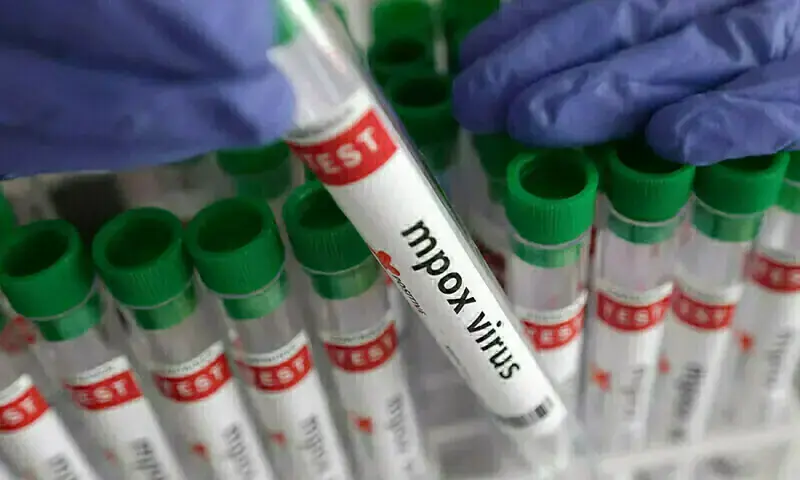
KARACHI: Two more patients have tested positive for mpox — one in Karachi and the other in Khairpur — on Tuesday, raising the provincial tally to 25 with, nine deaths this year. Sources told Dawn that all the cases are being linked to local transmission. According to a statement released by the health department, a total of 122 suspected cases of mpox have been reported in the province this year s
o far. Of them, 25 patients have tested positive, while nine patients have died. Officials said Khairpur is currently the hotspot for mpox in the province, with a total of 18 confirmed cases, followed by four cases in Karachi and three cases in Sukkur.
Nine deaths reported so far in Sindh; health dept keeps mum on source of transmission, circumstances surrounding fatalities The department’s statement, however, neither highlights how the highly contagious infection — earlier restricted to people arriving from abroad — is now spreading through local transmission nor explains the circumstances in which the nine deaths occurred. It also lacks detailed information about the new positive cases as well as the progress made in the investigation launched by the department against the two Khairpur hospitals — one government and the other private hospital — after several newborns contracted the infection there and later died.
Their neonatal units were, however, sealed when the outbreak was reported earlier this month. A few days earlier, the health minister had admitted that five of the nine children who were affected at the hospitals died. She explained, though, that mpox “was not the direct cause of their deaths, as the children were too weak and malnourished”.
Sources said the mpox patient who tested positive in Karachi on Tuesday is currently under treatment at the Sindh Infectious Diseases Hospital and Research Centre (SIDH&RC), where his condition is reported to be stable. The 43-year-old man — the third mpox patient at the hospital — is a resident of Malir and has no history of travel abroad in recent weeks. The last patient, a student from Buffer Zone, Karachi, left the hospital against medical advice a day ago.
“He should stay at the hospital till complete recovery, which usually takes three to four weeks. Otherwise, he can infect others,” said Dr Abdul Wahid Rajput, SIDH&RC Medical Superintendent (MS). According to the MS, the disease has no specific treatment, carries a low fatality risk, and management is largely supportive.
But, he pointed out, patient isolation is important to prevent its spread. “The patient has told us that his chowkidar (watchman) had developed some skin disease after visiting Shikarpur. He has now recovered.” According to the officials, the health department has taken immediate action by establishing isolation wards, setting up an efficient mechanism for transporting samples, enhancing disease surveillance and diagnosis, and carrying out contact tracing of affected patients.
It urged healthcare providers and citizens to strictly follow infection control protocols and report to nearby hospitals if they develop symptoms of the disease. Published in Dawn, April 15th, 2026