Across Britain a radical new feminism is rising
“If you’re feeling overwhelmed by the Epstein file drop, do not worry, girl,” Phoebe O’Brien says in a video, facing the camera. O’Brien has bright, green eyes, three silver nose rings and cropped blonde hair. “The Epstein class want you to hate every other group,” she tells her 80,000 TikTok followers.
“Migrants, brown people, poor people, disabled people, trans people.” O’Brien is one of many young, often attractive, female influencers whose content spans various left-wing and anti-imperialist causes. Each week she posts softly lit videos of herself denouncing Keir Starmer, Donald Trump and Israel. I watched a lot of O’Brien’s posts before I messaged her.
I wanted to understand how she got into this kind of content. In February we met in a café in south-east London. She wore a keffiyeh and sipped hot chocolate as she told me how the latest Jeffrey Epstein revelations had energised her.
It made the right-wingers who claimed to care about women and children’s safety look like hypocrites, she said. It was the billionaires who were the real problem. She’d been “teetering on the edge of an anxiety attack” since the files dropped.
To quell her panic, she’d been “working with other TikTok creators, doing journalist-type things”. O’Brien grew up in Leicester, in what she calls a working-class family. (She defined this in the Marxist sense, meaning anybody who works for a wage, unlike the “asset class” and what she calls the billionaire “Epstein class”.) She had always been progressive. But while studying for her master’s degree at Bristol University, she started going to Black Lives Matter protests on College Green and felt inspired by the collective energy she saw there.
She already had a TikTok following from sharing “random content”, but her audience rapidly grew as her posts got more political. Hamas’s 7 October 2023 attack on Israel, and Israel’s response in Gaza, was a “catalytic moment” for her. “I had been talking about immigration issues before, like Marxism, like philosophy,” she said.
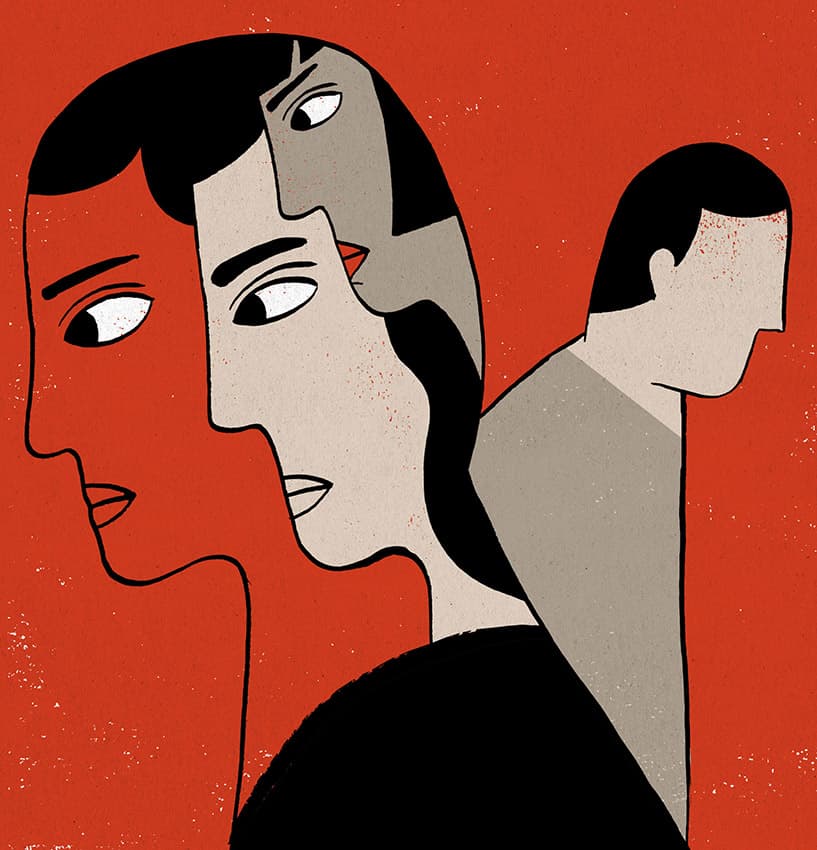
“Then it all just became the war.” O’Brien’s content, and that of a growing number of left-wing female influencers like her, is in some ways a mirror image of the content made by male influencers. While the toxic, often hard-right politics of the manosphere has been exhaustively documented, the new generation of female influencers are similarly radical – they are just on the other side of the political spectrum. On the internet, women and men have never been more alienated from each other.
Online divides have also bled into real life. Exclusive polling by Merlin Strategy for the New Statesman reveals that young women, aged between 18 and 30, are by far the most progressive demographic in the UK. This polling found that young women are 26 percentage points less likely to feel positively about capitalism than young men, and much less likely to feel the economy works in their favour.
They are also much more pessimistic about the future – their own, and everyone else’s. They also feel much more negatively towards young men than young men feel about them. While this “femosphere” spans a range of tones, much of it reinforces this hostility towards men: there are misandrist dating coaches who urge women to reject men altogether, and more explicitly progressive content creators who cover global and domestic politics.
Many of the left-wing accounts O’Brien interacted with were withering about men. Megan Cooper, a British “trauma-informed holistic therapist”, has a podcast called Higher Love in which she discusses violence against women, “hypermasculinity” and “the ecosystem of manufactured male victimhood”. On Instagram Cooper posted about the conflicts in Iran, Palestine, Beirut and Sudan.
“I don’t know about you but for the past few months, my bones have ached,” she wrote in March. “The viscerality of the feminine wound.” O’Brien has also shared posts from Frank Riot, a female artist with long bleached blonde hair. Scroll through Riot’s Instagram page and you’ll see selfies of her wearing “ACAB” (all cops are bastards) bandanas and suffragette rosettes, alongside infographics about Israel’s war crimes.
“Meet me by the ruins of the war machine,” read a recent post. “Kiss me at the dawn of its demise.” O’Brien told me she considers herself a revolutionary rather than an activist. “Revolutionary is more, ‘I want systemic change.
I don’t want to exist within these same systems. I want to be an instrument of the revolution.’” She said she felt anxious seeing injustice and doing nothing. It was a physical sensation in the centre of her body.
Perhaps this was why women were more likely to be progressive than men, she speculated. “Women tend to be a little bit more connected to their bodies and their physical sensations and emotions.” It seemed like an essentialist, even reactionary view of gender: the idea that women are emotional, physical beings, in a way men aren’t. But O’Brien said that anxiety spurred her on. “The only way I’ve fo