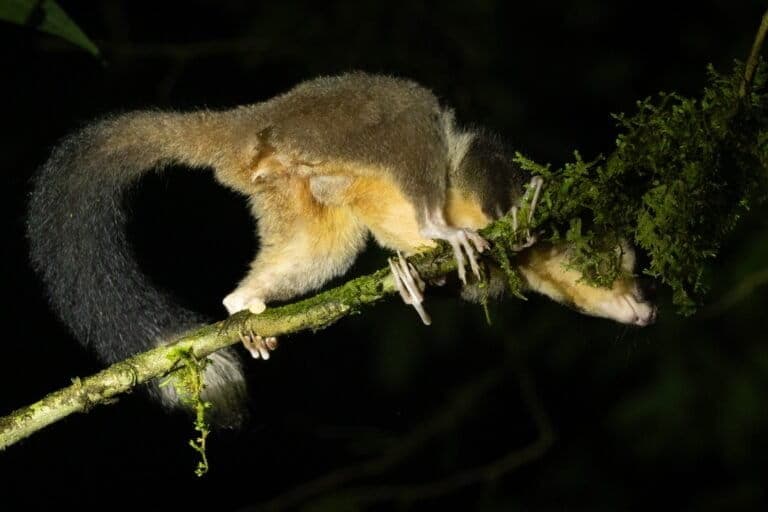
It started with a set of photographs, taken of an animal captured in 2015 on the Bird’s Head Peninsula in Indonesian Papua, the western half of the island of New Guinea. The smallish animal with “large hands” looked a bit like a slow loris, a small primate that doesn’t live on the island, or perhaps […]
It started with a set of photographs, taken of an animal captured in 2015 on the Bird’s Head Peninsula in Indonesian Papua, the western half of the island of New Guinea. The smallish animal with “large hands” looked a bit like a slow loris, a small primate that doesn’t live on the island, or perhaps a cuscus, which, like this specimen, is also a marsupial. Further inspection of the photos, however, suggested it might be something else altogether, a species long thought lost to extinction — by scientists, anyway.
Interviews in local communities provided a breadcrumb trail suggesting that a forest-dwelling glider, known — again, to science — only from millennia-old fragments of teeth and bone, might yet live in the forests of Indonesian Papua. Several years later, Rika Korain was approached by her longtime friend and colleague, Australian mammalogist Tim Flannery, who asked if she might help him get a bead on whether the animal still existed. Korain, a human rights lawyer and Indigenous Maybrat woman, immediately thought of the elders from the Tambrauw people, a group that lives close to the Maybrat and with whom they share traditions in common.
“I’m from the Bird’s Head area,” she says. “I told [Flannery], let’s find out from my clan, from my people’s side. Let’s try to talk with the elders or especially the hunters who always go to the jungle to find out whether they see this particular animal.” So in 2023, she and Flannery spoke with two Tambrauw elders,…This article was originally published on Mongabay